






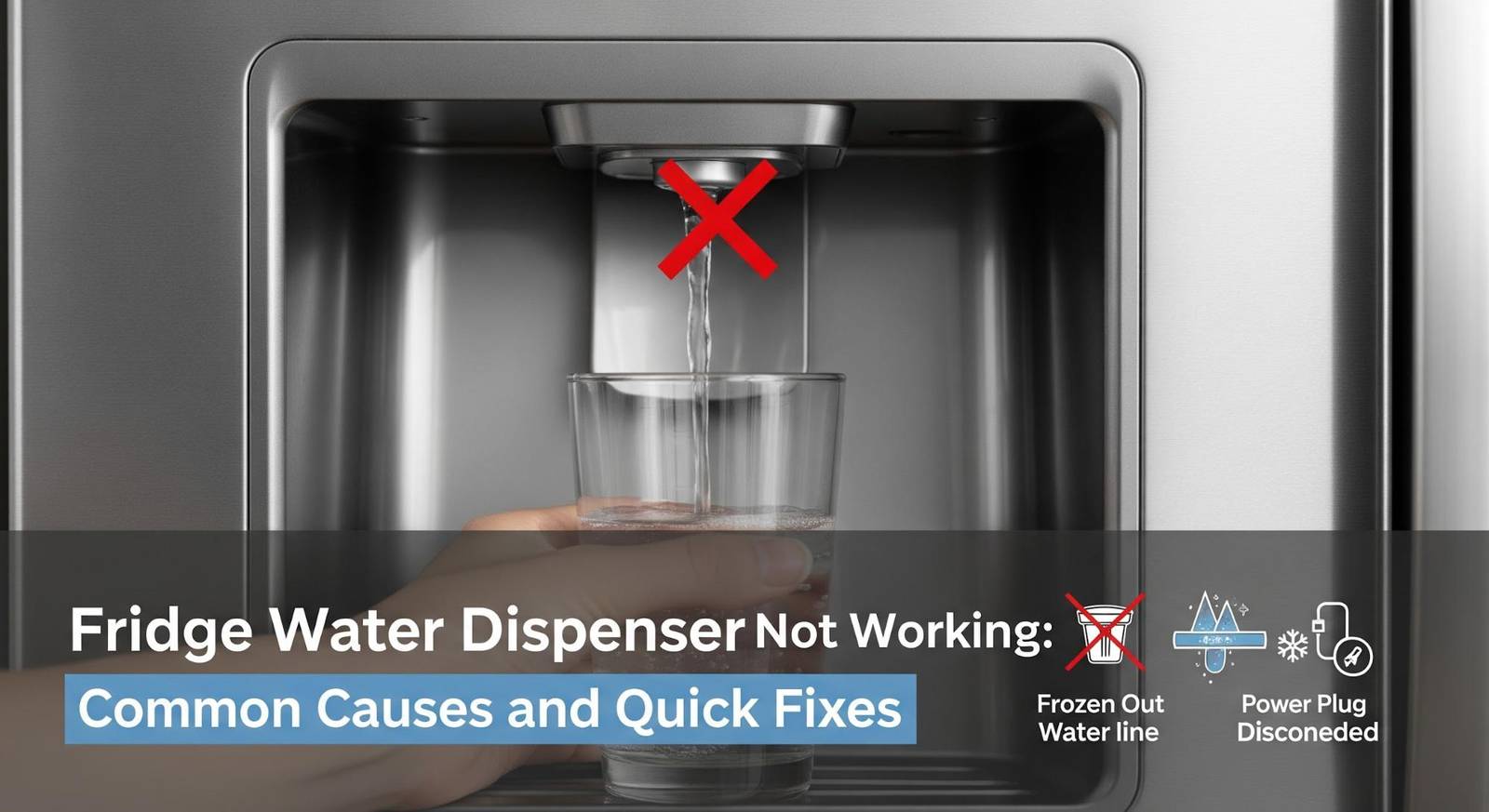
A refrigerator water dispenser that stops working can be a hassle, but most problems come down to a few common issues: a clogged filter, a frozen water line, a kinked supply tube, or a faulty dispenser switch. The good news is that many of these issues can be resolved without professional help.
This guide will walk you through essential checks, help you diagnose common causes, and explain when it’s time to contact Endpoint Plumbing for expert repair.
Quick and Essential Checks
When your refrigerator water dispenser stops working, start with three areas: the control lock, the water supply line, and the filter condition. These checks require no special tools and solve most dispenser issues quickly.
Confirm Power and Dispenser Control Lock
Check if your dispenser’s control lock is activated. Most modern fridges have a child lock feature that’s easy to engage accidentally when cleaning the control panel. Look for a lock icon or press and hold the lock button for a few seconds.
If the lock isn’t the issue, verify your fridge has power. Make sure it’s plugged in and the circuit breaker hasn’t tripped, as a partially disconnected power cord can cause the dispenser to malfunction while the fridge continues cooling.
Inspect Water Supply Valve and Water Line
Locate the water supply valve behind or beneath your fridge and ensure it’s fully open by turning it anticlockwise. Pull your fridge away from the wall to examine the water line for kinks, pinches, or ice blockages.
If the line is frozen, thaw it by turning off the water supply and using a hairdryer on low heat, moving it constantly to avoid damage. If freezing recurs or you notice leaks at the water inlet valve connection, contact Endpoint Plumbing for a professional assessment.
Assess Water Filter Status
A clogged water filter is one of the most common causes of dispenser problems. Most manufacturers recommend replacing filters every six months, though hard water areas may require more frequent changes.
Remove your filter according to your fridge manual and check for visible debris or discolouration. Install a new filter if yours is overdue, then run several litres of water through the dispenser to clear air and flush residues. If water flow remains weak after replacement and all valves are open, the water inlet valve may be faulty – a repair best handled by professionals like Endpoint Plumbing.
Diagnosing Common Causes
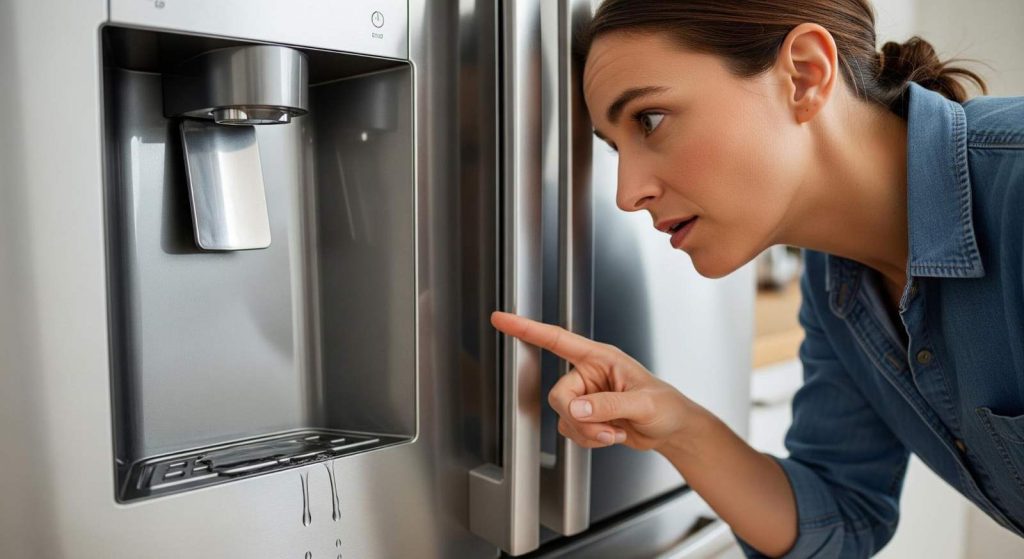
If the quick checks above haven’t resolved the issue, the problem likely sits with one of these three components.
Water Inlet Valve Problems
The water inlet valve controls water flow from your home’s supply line into the refrigerator. A failed valve often results from mineral buildup or a malfunctioning solenoid. If you hear a clicking sound but no water comes out, the solenoid might be activating while the valve remains stuck closed.
You can test the valve by disconnecting the supply line and checking water flow at the connection point. The inlet valve requires at least 20 psi to function. If water flows freely from the line but nothing comes through the valve, it’s likely failed.
Replacement involves shutting off the water supply, disconnecting the lines, and accessing the valve at the back of your fridge. Incorrect installation can lead to leaks and water damage. If you’re unsure, Endpoint Plumbing can diagnose and replace faulty inlet valves quickly.
Clogged or Old Water Filter
A clogged filter restricts water flow, causing slow dispensing or no water at all. You might also notice reduced ice production. Remove the filter and try dispensing water without it. If water flows normally, the filter is the problem.
Replace it with a genuine or compatible filter for your model. Never attempt to clean and reuse a disposable filter, as this won’t restore proper filtration or flow.
Frozen Water Line or Reservoir
A frozen water line typically happens when your freezer temperature is set too low or humid air enters the water line compartment. You’ll know you have a frozen line if the ice maker also stops working or you hear the dispenser motor running without water coming out.
To thaw a frozen line, unplug the refrigerator for several hours or use a hairdryer on low heat, keeping it at least 15 cm away from plastic components. Never use sharp objects to chip away ice.
If your water line repeatedly freezes, check your freezer temperature settings and ensure the water line insulation is intact. Persistent freezing may indicate a deeper issue. Endpoint Plumbing can identify why your system keeps freezing up.
Electrical and Mechanical Faults
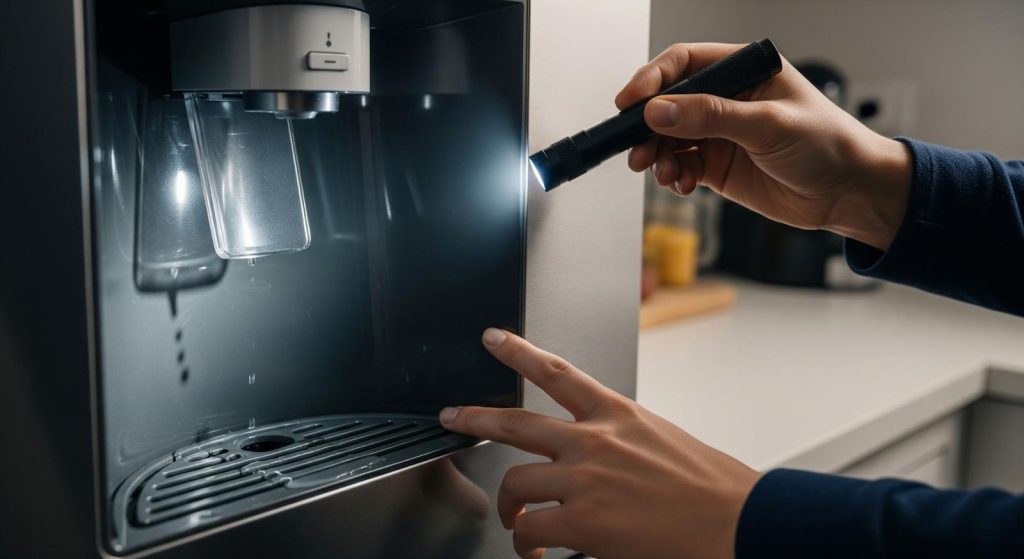
Electrical and mechanical components control whether water flows when you press the dispenser lever. Failures in switches, control boards, or actuators will stop the dispenser from responding.
Dispenser Switch Issues
The dispenser switch behind the lever closes an electrical circuit to signal the water valve to open. These micro switches can wear out from repeated use or fail due to moisture. Signs of switch failure include no response when pressing the lever, intermittent operation, or complete silence from the dispenser.
You can test the switch with a multimeter by checking for continuity when the lever is pressed. If you’re uncomfortable working with electrical components, Endpoint Plumbing can diagnose and replace these switches efficiently.
Control Board and Door Switch Problems
The dispenser control board processes signals and sends power to the water inlet valve. When it fails, the dispenser becomes unresponsive or behaves erratically – for example, the ice dispenser works but water doesn’t, or you see display errors.
The door switch must register as “closed” for the dispenser to work. A misaligned or faulty door switch tricks the system into thinking the door is open, blocking all dispenser functions. Check the door switch by opening and closing the door while listening for a firm click.
Control board and door switch repairs involve disconnecting electrical harnesses and are best suited for professional service. Endpoint Plumbing carries replacement boards for most models.
Water Pressure and Supply Line Troubles
Low water pressure can reduce your dispenser to a trickle or stop water flow entirely. Test other taps in your home to determine if the issue affects your entire household or just the refrigerator.
Pull your fridge away from the wall and inspect the supply line for kinks, sharp bends, visible leaks, crushed sections, or ice buildup. Copper and plastic supply lines can kink easily when fridges are pushed back carelessly. Even a small bend can reduce flow significantly.
To test the supply line, disconnect it from the inlet valve (place a towel underneath first) and turn on the valve. Strong, steady flow means the line is fine and the issue is inside the fridge. Weak or absent flow confirms a supply line problem.
Replace any damaged supply lines immediately. If the supply line is clear but problems persist, the inlet valve or internal components may need replacement. Endpoint Plumbing handles these complex repairs and can diagnose hidden issues.
When to Seek Professional Repair
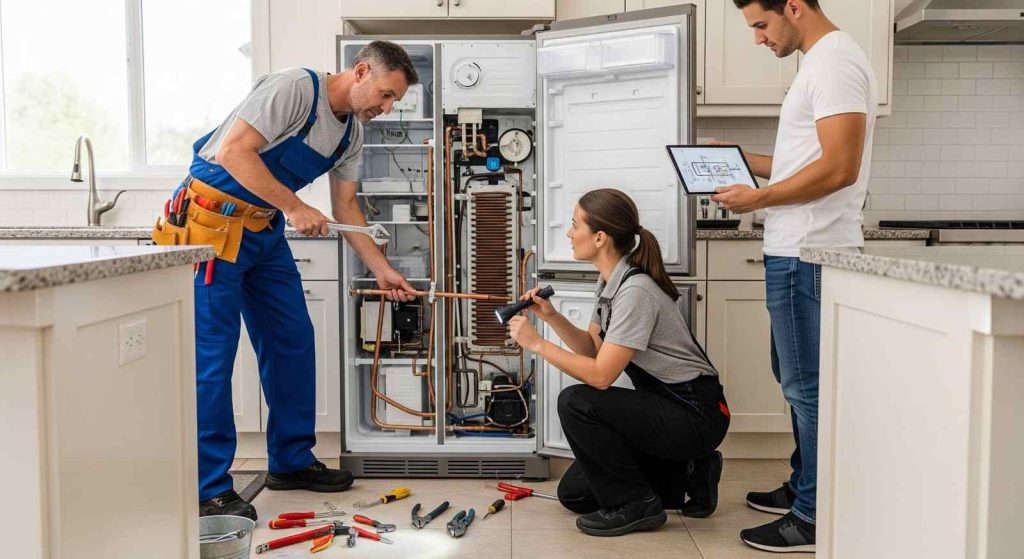
You should contact a professional if you’ve checked for kinked lines, replaced clogged filters, and thawed frozen supply lines but water still doesn’t flow. Faulty water inlet valves, internal wiring problems, malfunctioning control boards, and physical damage to hidden tubing all require specialised tools and expertise.
Professional repairs typically cost between $150 and $400, depending on the issue. Before committing, request a detailed quote covering the diagnostic fee, parts costs, labour charges, and warranty coverage.
At Endpoint Plumbing, we provide transparent pricing and expert diagnosis for refrigerator water dispenser issues. We service all major appliance brands and offer warranties on our repair work, giving you confidence that the job is done right.
Preventative Maintenance and Care
Keeping your fridge water dispenser in top condition requires routine attention to filters, cleaning, and basic upkeep.
Wipe down the dispenser nozzle and drip tray weekly with warm water and mild detergent. Remove the drip tray monthly and soak it in warm water and white vinegar for 15 minutes to prevent mould buildup.
Replace your water filter every six months – more often if you have heavy usage or hard water. Signs you need immediate replacement include slow water flow, cloudy or odd-tasting water, and reduced ice production. Always purchase genuine manufacturer filters or certified compatible alternatives.
Check your water supply valve quarterly to ensure it’s fully open. Inspect the water line behind your fridge for kinks or wear. During winter, ensure the temperature where water lines run doesn’t drop below freezing. If freezing persists, Endpoint Plumbing can assess whether your water line routing needs modification or better insulation.
Run water through your dispenser for 30 seconds once a week if you don’t use it regularly. This keeps water fresh and prevents unpleasant tastes or odours.